
At Divine Global, we specialize in the procurement and sourcing of premium saffron tailored for B2B buyers across India and global markets. Whether you require saffron for food manufacturing, cosmetics, or pharmaceuticals, our streamlined procurement network and supplier relationships ensure cost-effective, traceable, and timely delivery of saffron at scale. We help businesses optimize sourcing costs, ensure consistent quality, and meet production deadlines through structured contracts and a robust quality assurance process
We offer a wide portfolio of edible oils sourced directly from certified processors and global producers.
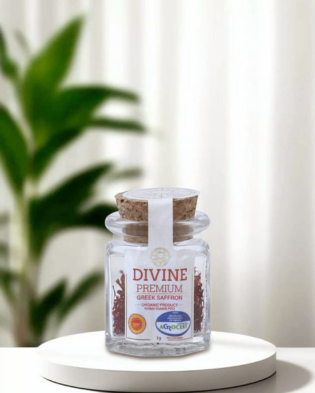

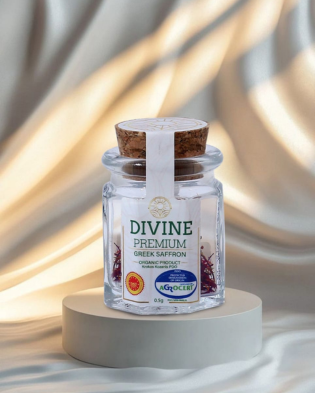

The colouring, scenting, flavouring and medicinal properties of saffron are due to two basic (acting) components: picrocrocin and crocin, especially in the unsweetened parts of them i.e. in the safranal of the first and the crocetin of the latter. Other ingredients of saffron are lycopene, zeaxanthin, α, β
and γ-carotenes, vitamin B and B2, carbohydrates and essential oil.
From picrocrocin via enzymatic hydrolysis we get the unsweetend part which in turn is converted to saffranol, the main component of essential oil, that gives saffron its characteristic scent.
From crocin with acid we get the unsweetened part, crocetin, which is the main colouring part of the product. In the market, the percentage of the essential oil and the colouring strength of saffron (which should be as high as possible) basically defines its quality.
It is used in pharmacy, confectionery, cooking, cheese-making, distillery, even in painting. Byzantine artists used it considerably. In popular medicine it is used as a emmenagogue, antispasmodic and stimulant. Many experts argue that in small doses it relieves kidney pains, stimulates the appetite and it facilitates digestion. In addition it limits convulsions,
hysterics, nervous colics and whooping cough. Externally it is used to cure pimples, inflamations and breast diseases.
From ancient times, saffron was considered to have aphrodisiac properties. Many authors, Greek mythology, even Old Testament itself, associate saffron with love-making and fertility.
Nowadays, it is still used extensively as a spice in various foods in every economically developed country, especially in Europe. In India, it is used widely as an icense in religious ceremonies, as well as in painting the mantles of the priests, a custom that ancient Egyptians and Romans also had.
The cultivation of edible saffron is made for the reddish stigmas of its flower (three columns of pistil), which is a product of high pharmaceutical, collouring, flavoring and scenting value.
The only kind of saffron that is systematically cultivated around the world, for at least ten centuries, is the edible saffron or as it known in scientific (botanical) terminology Crocus Sativus Linneaus. The special botanical features of this kind of saffron are:
Diameter of about 2-3cm, fleshy with spherical shape with brown meshy tunics.
There can be up to three flowers from each bulb, which come out in October/November and they form small bristled cones, which after some hours they open losing their first shape.
These consist of:
The stigmas in particular, which give the prodrug of the plant, are glossy coloured red to orange and their length is 40-50mm, together with the part of the column. On the top they are jagged and because of their weight they are drooping; many times outside of the cone formed by the petals.
The leaves that come out directly from the bulb are deepgreen, sword-like and streaked. They grow during the winter and in spring they reach 40-50cm, at which point they are harvested just before they dry out.
The only saffron-cultivated area in Greece is the region of Kozani, in some villages of which (Krokos, Ano Komi, Kato Komi, Karyditsa, Kozani, Agia Paraskevi, Aiani, Vathilakos, Kesaria,etrana, Lefkopigi, etc.) there has been systematic cultivation for many years.
After many fluctuations in cultivation land areas and the threat of its complete dissapearance during the early postwar years (1941-1950), it now covers roughly about 500 acres, 250 of which, is land used for organic cultivation, distributed thoughtout the land areas of Kozani prefecture.
In recent years, the annual production was around 3,000 to 4,000kg of red saffron.
The following cultivating process, as it is true for any product, varies from country to country depending on the climate and soil conditions, the long tradition, experience, expertise and ability of each country’s producers to adapt to new developments.
The flowers that start to grow in mid-October are picked by groups, usually consisting of women, put in their aprons or baskets and taken to their houses in hampers. This laborious work, which requires a degree of certain skills, is taking place from sunrise until sunset and lasts 20 to 25 days.
The drying of the stigmas is the single most important and delicate task and requires experience, great care and skills.
If saffron dries normally, it preserves its characteristic properties (colour-aroma) while at the same time its quality improves, without losing its colouring strength and its essential oil.
After the drying, the separation of red stigmas from the yellow stamens, the pollen and any impurities, begins.
This part of the process, which is done by hand, can last from 20 to 60 days. Finally, the dried product is separated based on the colour (red or yellow) ready for delivery.
The average produce per acre is 6kg of dried stigmas (red product).
The lower production of the plant is on the first year of the plantation, while the highest on the third and the fourth.
The gathering of the saffron product in the Cooperative starts immediately after the drying, sorting and purifying the stigmas.
The large quantities of Kozani’s saffron are sold in stigmas which are packaged and sold in the market in small packs of 0.5, 1, 2, 4 and 28gr. Saffron in such packages is intended for use as flavoring in various foods
Consumer countries are considered to be the following:
Spain, Italy, France, U.S.A., Switzerland, England, Germany, Scandinavia, The Netherlands, U.A.E. and Japan.
In trading, the edible saffron is basically distinguished by the name of the region that it was produced, which constitutes the first rough quality ranking, since all buyers know the quality condition of each product area. The Greek red saffron is marketed as “Krokos Kozanis”.
Regardless of the aforementioned distinction of saffron, externally its quality is determined by the colour, flavour and size of the stigmas. More specifically the quality characteristics of good saffron are:
Yes, Divine Global specializes in providing bulk quantities of premium saffron to businesses of all sizes. Whether you require saffron for small-scale production or large-volume needs, we offer flexible procurement options to meet your business requirements.
We take quality seriously. Each batch of saffron undergoes strict quality control procedures to ensure purity, potency, and consistency. Our saffron is tested for authenticity, color, aroma, and flavor, ensuring that only the best quality reaches our customers.
Placing an order is simple! Contact us via our website or get in touch with our sales team. We’ll work with you to understand your requirements, offer competitive pricing, and deliver saffron according to your specifications.

